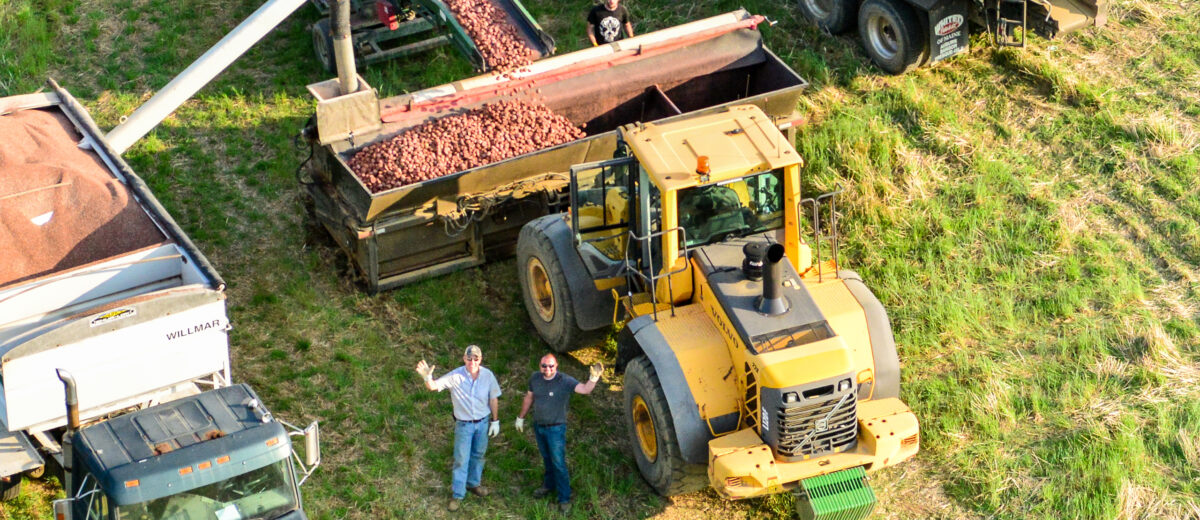

About the Maine Potato
A potato is a vegetable; Solanum tuberosum is the scientific name for the potato. A small plant with large leaves, it contains a lot of starch and other carbohydrates. The part of the potato that people eat is a tuber that grows underground.
In terms of nutrition, the potato is best known for its carbohydrate content (approximately 26 grams in a medium potato). A medium-size potato with the skin provides 27 mg of vitamin C (45% of the Daily Value (DV)), 620 mg of potassium (18% of DV), 0.2 mg vitamin B6 (10% of DV) and trace amounts of thiamin, riboflavin, folate, niacin, magnesium, phosphorus, iron, and zinc. The fiber content of a potato with skin is equivalent to that of many whole grain breads, pastas, and cereals.
Culinary Uses
Potatoes are prepared in many ways: skin-on or peeled, whole or cut up, with seasonings or without. Most potato dishes are served hot, but some are first cooked, then served cold, notably potato salad and potato chips.
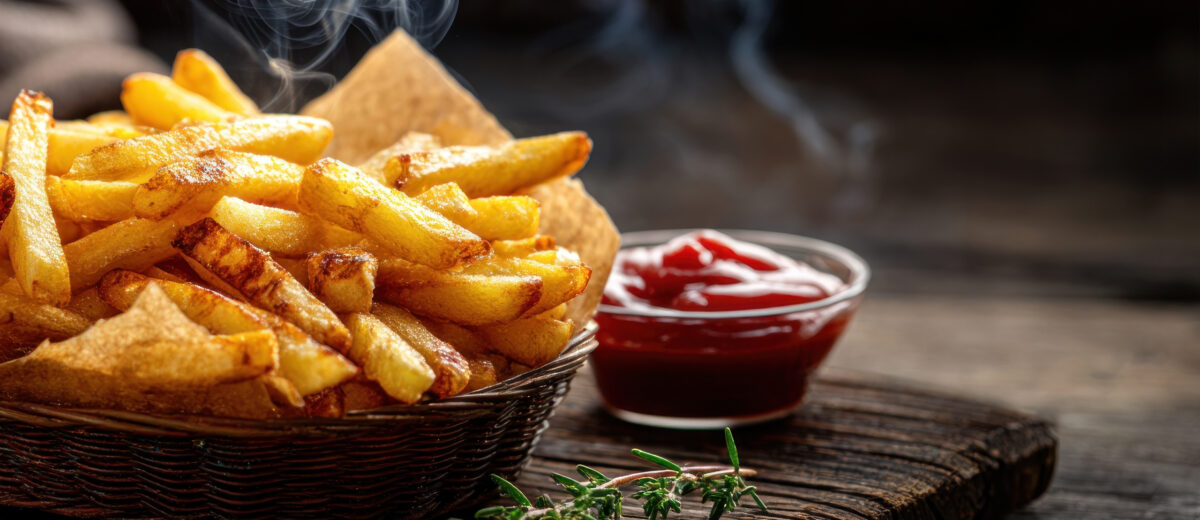
Common dishes are: mashed potatoes, which are first boiled (usually peeled), and then mashed with milk or yogurt and butter; whole baked potatoes; boiled or steamed potatoes; French-fried potatoes or chips; cut into cubes and roasted; scalloped, diced, or sliced and fried (home fries); grated into small thin strips and fried (hash browns); grated and formed into dumplings, Rösti or potato pancakes. Unlike many foods, potatoes can also be easily cooked in a microwave oven and still retain nearly all of their nutritional value, provided they are covered in ventilated plastic wrap to prevent moisture from escaping.
Other Uses
- Potatoes are used to brew alcoholic beverages such as vodka, potcheen, or akvavit.
- They are also used as food for domestic animals.
- Potato starch is used in the food industry as, for example, thickeners and binders of soups and sauces, in the textile industry, as adhesives, and for the manufacturing of papers and boards.
- Maine companies are exploring the possibilities of using waste potatoes to obtain polylactic acid for use in plastic products; other research projects seek ways to use the starch as a base for biodegradable packaging.
Origins of the Potato
The potato, from the perennial Solanum tuberosum, is the world's fourth largest food crop, following rice, wheat, and maize. The Inca Indians in Peru were the first to cultivate potatoes around 200 B.C.In 1536 Spanish Conquistadors conquered Peru, discovered the flavors of the potato, and carried them to Europe. Before the end of the sixteenth century, families of Basque sailors began to cultivate potatoes along the Biscay coast of northern Spain. Sir Walter Raleigh introduced potatoes to Ireland in 1589 on the 40,000 acres of land near Cork. It took nearly four decades for the potato to spread to the rest of Europe.
Eventually, agriculturalists in Europe found potatoes easier to grow and cultivate than other staple crops, such as wheat and oats. Most importantly, it became known that potatoes contained most of the vitamins needed for sustenance, and they could be provided to nearly 10 people for each acre of land cultivated.
Potatoes in the United States
Potatoes arrived in the Colonies in 1621 when the Governor of Bermuda, Nathaniel Butler, sent two large cedar chests containing potatoes and other vegetables to Governor Francis Wyatt of Virginia at Jamestown. The first permanent potato patches in North America were established in 1719, most likely near Londonderry (Derry), NH, by Scotch-Irish immigrants. From there, the crop spread across the country.The Irish Potato Famine
In the 1840s a major outbreak of potato blight, a plant disease, swept through Europe, wiping out the potato crop in many countries. The Irish working class lived largely on potatoes and when the blight reached Ireland, their main staple food disappeared. This famine left many poverty-stricken families with no choice but to struggle to survive or emigrate out of Ireland. Over the course of the famine, almost one million people died from starvation or disease. Another one million people left Ireland, mostly for Canada and the United States.Following the Irish Potato Famine, most Americans regarded the potato as food for animals rather than for humans, until an effective fungicide against potato blight was found in 1883 by French botanist, Alexander Millardet.